
Good writing often begins with the "delete" key. This guide explores the "Kill Your Darlings" philosophy, specifically within the high-stakes constraints of flash fiction. By auditing filler words, redundant phrasing, and excessive tagging, writers can shed 10% of their word count to uncover a leaner, more impactful, and professional narrative.
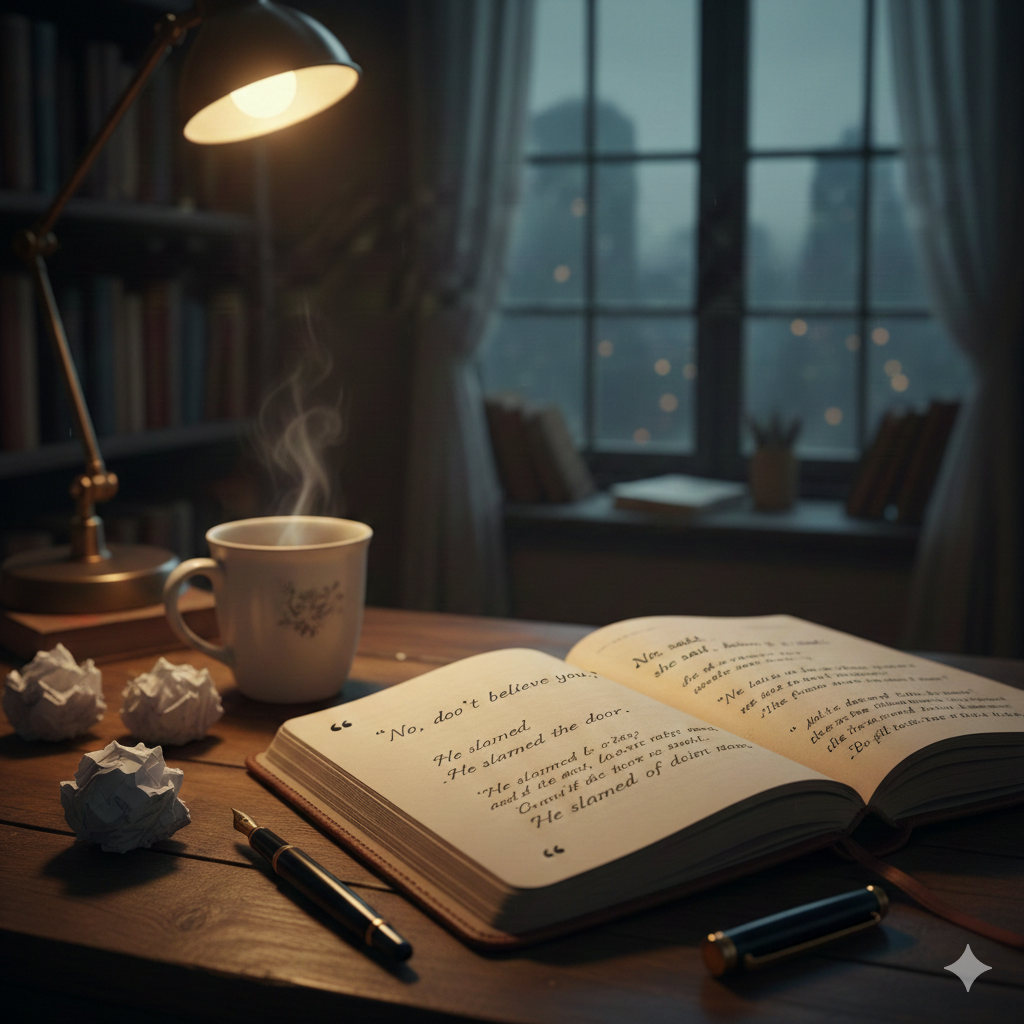
Dialogue is the most effective tool for immediately hooking a reader, provided the mechanics don't get in the way. By emphasizing that dialogue should appear as early as the first or second line of a story, the piece shifts into a masterclass on the technical precision required to keep readers immersed.

Learn how line editing refines prose, strengthens impact, and enhances storytelling by fixing cluttered sentences, weak syntax, and pacing issues.

A great literary scene is more than describing a setting. It’s all about action, mood, and character in motion to convey a deeper sense of meaning. Learn how to craft immersive, engaging scenes that captivate readers!

A great story isn’t just about what happens. Good authors know how stories make readers feel. Learn how to use narrative intention to craft emotional, unforgettable fiction.

A great short story grabs fast, builds tension, and ends with impact. Learn how to structure yours for maximum effect—all in limited space!

A short story isn’t just a tiny novel — it’s a punchy, powerful narrative that delivers impact in limited words. Learn how to craft one like a pro!

Autocorrect isn’t perfect! Discover how to catch common spelling mistakes, boost your skills, and avoid relying too much on technology.

Inclusive language makes your writing welcoming and impactful. Discover simple grammar tips for gender-neutral storytelling that resonates with everyone!

Dissonance in literature is a double-edged sword. Learn how to avoid reader confusion and use intentional dissonance to elevate your storytelling.

Discover why conflict is the lifeblood of storytelling and learn how to craft gripping central conflicts that make your short stories unforgettable.

Tension is the lifeblood of storytelling! Let’s explore 8 types of tension to captivate readers and bring your stories to life. Ready to level up your craft?

Keep readers on the edge of their seats! Learn how to craft suspense by layering tension, teasing curiosity, and building high-stakes moments in your story.

Struggling with top-heavy short stories? Front-loaded descriptions can sink your pacing. Learn how to balance detail and action in your openings!

Discover how choosing the right POV can transform your storytelling and bring your characters' emotional journeys to life.

Overusing onomatopoeia can turn your story into a comic strip rather than compelling prose. Bang! Choose sound words wisely to elevate your writing.

Writing contests aren’t about winning—they’re about growing. Compete with yourself, embrace the craft, and connect with a passionate community of writers.

Add layers to your story with symbolism. Discover how to weave themes into your narrative with objects, events, and characters that speak volumes.

Underdeveloped characters sink stories. Learn how to create rich, relatable personalities that captivate readers and keep them turning the page.

A satisfying ending lingers. Learn how full-circle, twist, and ambiguous endings can give your short story the resonance it deserves.

Character arcs add depth to short stories, showing your characters’ growth or transformation. Discover how to craft arcs that resonate with readers!

Stakes make your story unforgettable. Show readers what’s at risk, and they’ll stick around to see if your characters triumph—or fall.

Craft characters readers care about! Learn how dialogue, monologue, and body language build emotional engagement in your stories.

Characters need agency to thrive in your story. Without it, they’re passengers, not drivers. Learn how to give your characters the wheel.

Do writing contests reward fluff? Sometimes. But efficient prose isn’t the enemy—it’s the secret weapon for building pace, tension, and memorable characters.

Cutting unnecessary words helps keep your writing clean and powerful. Here’s how to identify and trim the fluff from your prose.

Over-describing character outfits can bog down your story. Learn when to highlight clothing details and when to let readers fill in the gaps.

Horwich Cobbleberry tempts fate yearly with the cursed Keening Cup, a relic said to summon a banshee and reveal one's death. This year, fate may answer back.

Balancing big and small words in fiction can boost readability and style. Here’s how to make the right choice for your story.

Maid-and-butler talk makes dialogue feel forced and artificial. Learn how to avoid it for more natural conversations in your writing.

Passive voice can make your writing feel distant and dull. Here’s why you should avoid it—and how to keep your prose engaging and sharp.

Hedging words like ‘maybe’ and ‘kind of’ dilute your writing—here’s why you should cut them out.

Master the art of split infinitives! Learn what they are, when to avoid them, and how to correct them to make your writing clearer and smoother.

Discover how intensifiers supercharge your writing! Learn when to use them for maximum impact and when to avoid overdoing it.

Unlock the gallant power of gerunds! Learn how these action-packed nouns bring dynamic energy and fluidity to your writing, making your sentences truly shine.

Discover the power of verbs and how they drive your stories forward. Master the action, avoid passive voice, and take your writing to the next level!
Nouns are the building blocks of your sentences, bringing people, places, and things to life in your writing! Get cozy with them and elevate your prose!

Master your mechanics—spelling, grammar, and punctuation—so your stories shine and captivate readers without distraction! #WritingTips #NewAuthors

Master mechanical notations in writing to elevate your fiction! Parentheses, brackets, and more—learn how to use them effectively. #WritingSkills

Master the art of pacing by using pauses in your writing. Learn how to control the rhythm and impact of your story with these simple techniques.

Wondering if you need the Oxford comma in your writing? Discover why this tiny punctuation mark could be your new best friend!

Master the comma, colon, semi-colon, and period to elevate your writing and make your sentences breathe.

Learn how to use ellipses effectively in your writing and avoid common pitfalls with our easy guide for new authors.

Learn how to use em-dashes in dialogue to add realism and depth to your characters' conversations. #WritingTips #DialogueMagic

Learn when to use an em-dash vs. a comma to control the pace and tone of your writing. #WritingTips #PunctuationMatters

Learn the differences between em-dash, en-dash, and hyphen to add clarity and style to your writing. #WritingTips #PunctuationPower


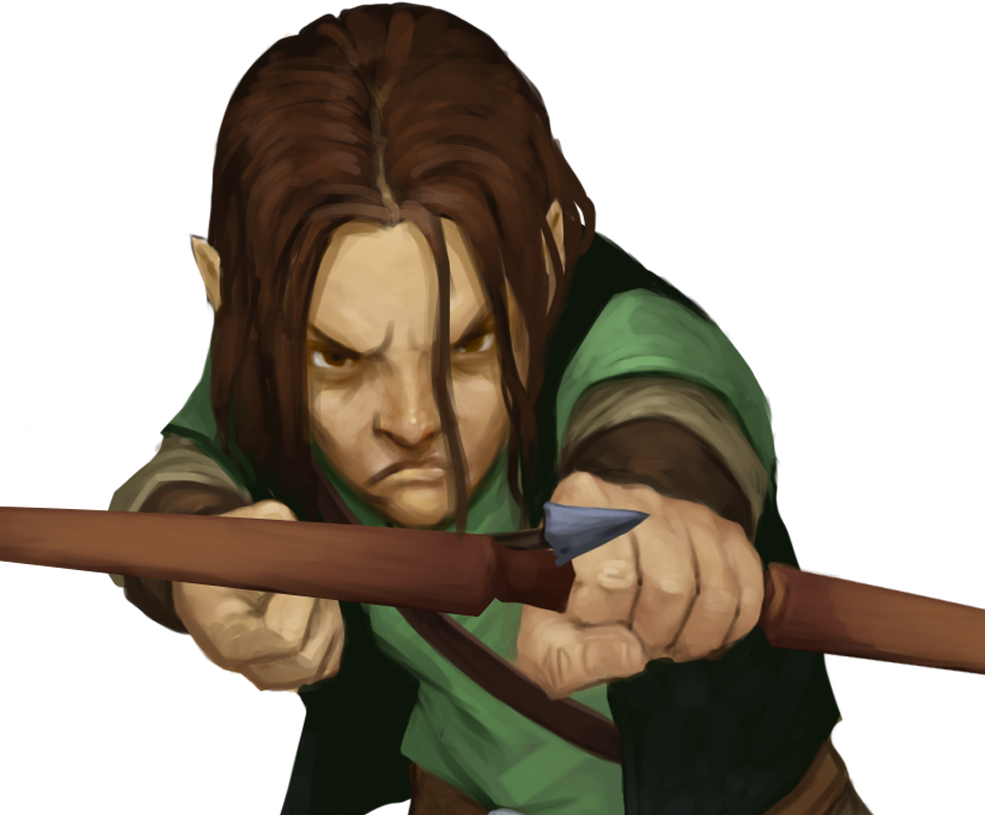



A discussion about the second episode/chapter two, of A Goblet of Bone and why Brigantia is structured the way it is for telling the story.