Writing Battle’s Autumn 2025 Contest
Yes, again, it’s time for another Writing Battle — one of the best amateur writing contests on the Interwebz — and my cards weren’t too bad.
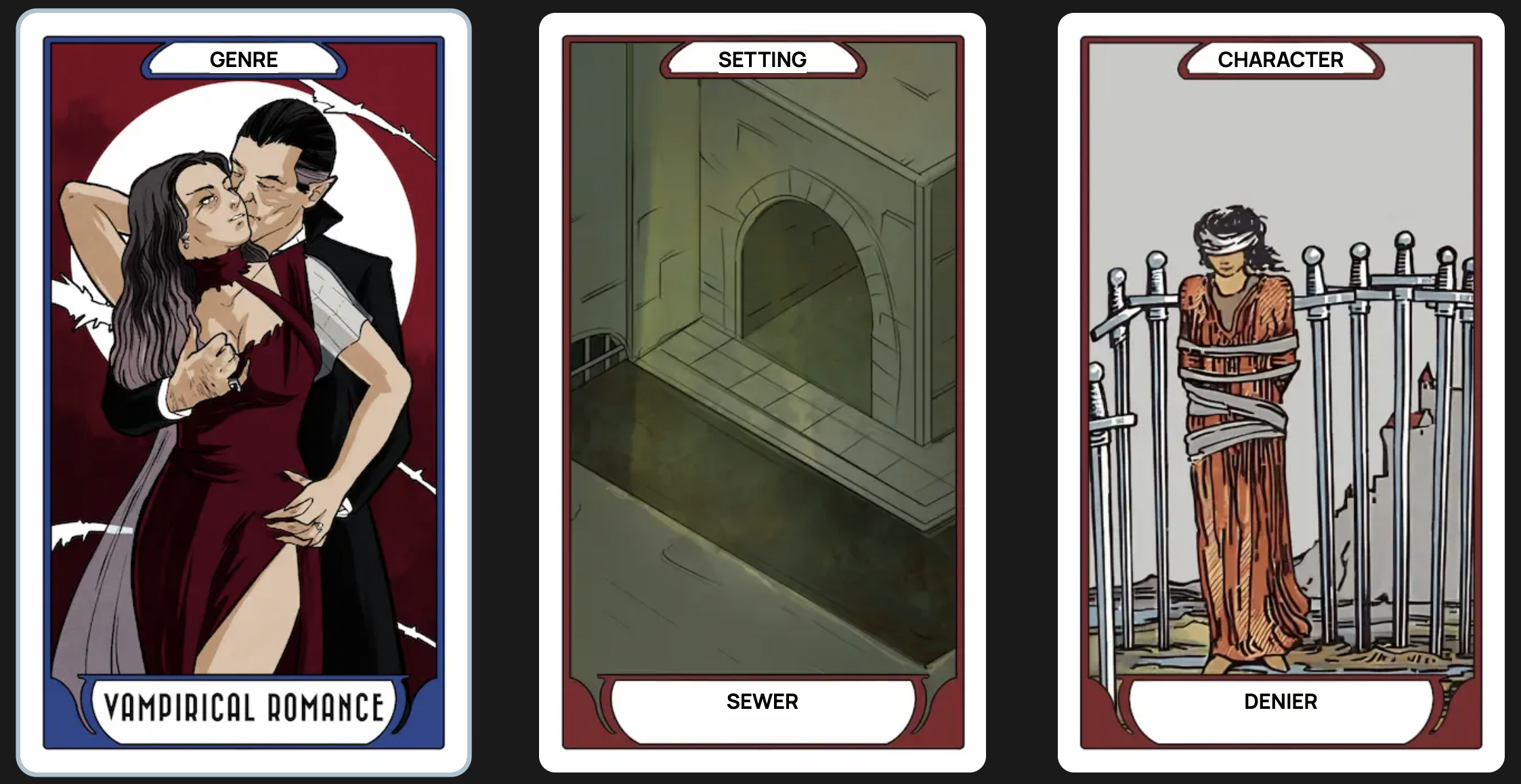
A Vampire Romance! Yay! Well, okay. I’m not too much into the romance aspect of things, but I dig vampires, and I wanted to write something of a traditional vampire story in the spirit of Bram Stoker.
My story, Blackfrairs Bride, takes place around 1868 in London, and starts on a soggy, rainy autumn night under the iron skeleton of Blackfriars Bridge.
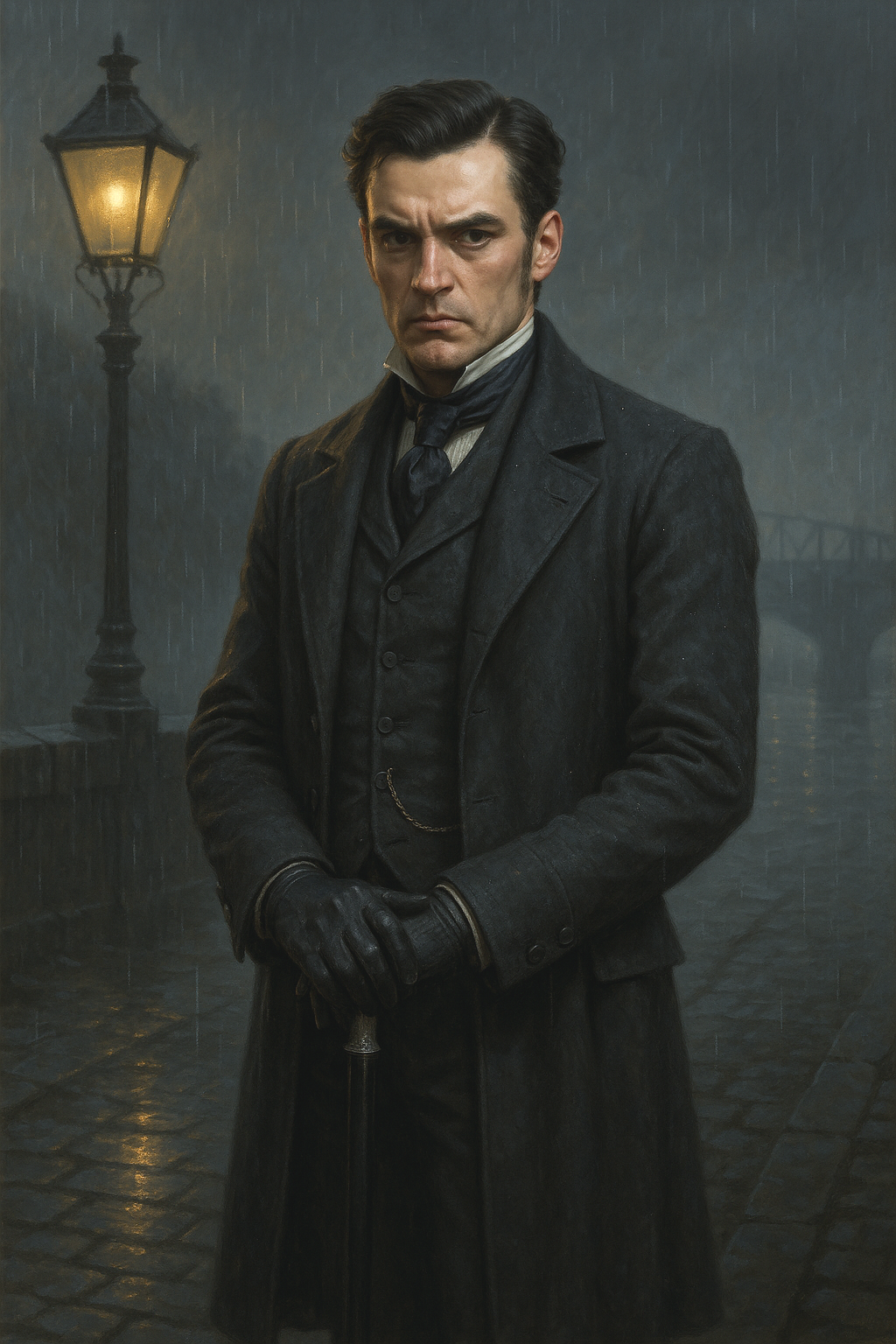
My protagonist is a Victorian industrialist named Julian Harrow. Julian is a man of his time: a greedy aristocrat who wears entitlement like a fine coat. Julian prides himself on reason, control, and the comforts purchased by wealth in London’s suburbs, yet beneath his polished exterior seethes a desperate hunger. He wishes to possess. He hopes for validation. He wants a world that bends to his will. And his love for Eveline is no exception: fierce, idealized, and rooted less in devotion than in the fear of losing what he believes he’s owed.
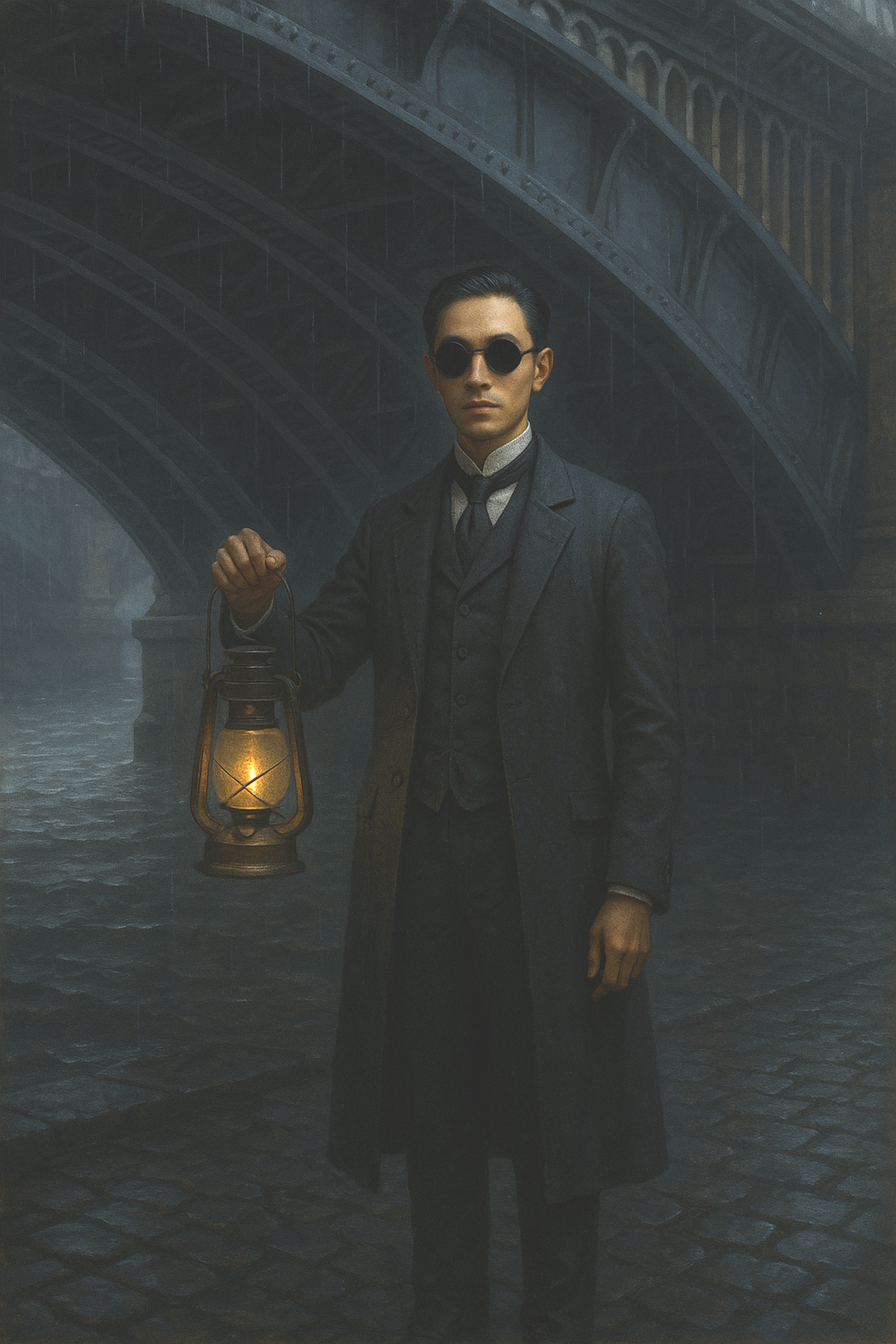
Julian’s fiancée, Eveline, is missing, and to find her, he hires a private detective, the enigmatic Dr. Liang Shen, a master of Eastern medicine. Dr. Liang’s calm demeanor masks a profound otherworldliness. Slender and impeccably dressed in a charcoal coat and cravat, he moves with deliberate grace. His brass-rimmed spectacles obscure eyes that seem to assess more than flesh and bone. Part healer, part mystic, Liang navigates London’s shadows, operating by Eastern principles that no ordinary Western doctor follows. I didn’t have much time to characterize Dr. Liang, but I thought his introduction was sufficient.
I’d made Liang’s acquaintance by way of the Limehouse laundry that attended my family’s London townhouse. Their service was a front, of course. Real business was conducted in the basement, through a half-hidden door behind racks of drying shirts and down a stone staircase smelling of lye, incense, and pickled ginger. A charming boy with a shaved head brought me to a room crowded with Chinese antiquities: paper lanterns, porcelain vases painted with blue dragons, a decapitated jade Buddha, and strands of twine strung from the ceiling, decorated with tinkling glass ornaments.
And there, tranquil amid the clutter, Liang Shen rose from a tea table to greet me. He neither bowed nor smiled, but regarded me quietly, his stillness unsettling, his poise too perfect. A physician and a master of herbal medicine, Liang was reputed to be capable of finding anyone. His price was of no consequence.
I feel the decapitated Buddha’s a dead giveaway, but this paragraph, by far, is the one I’m most proud of, and I thought it said precisely what it needed to about Dr. Liang Shen.
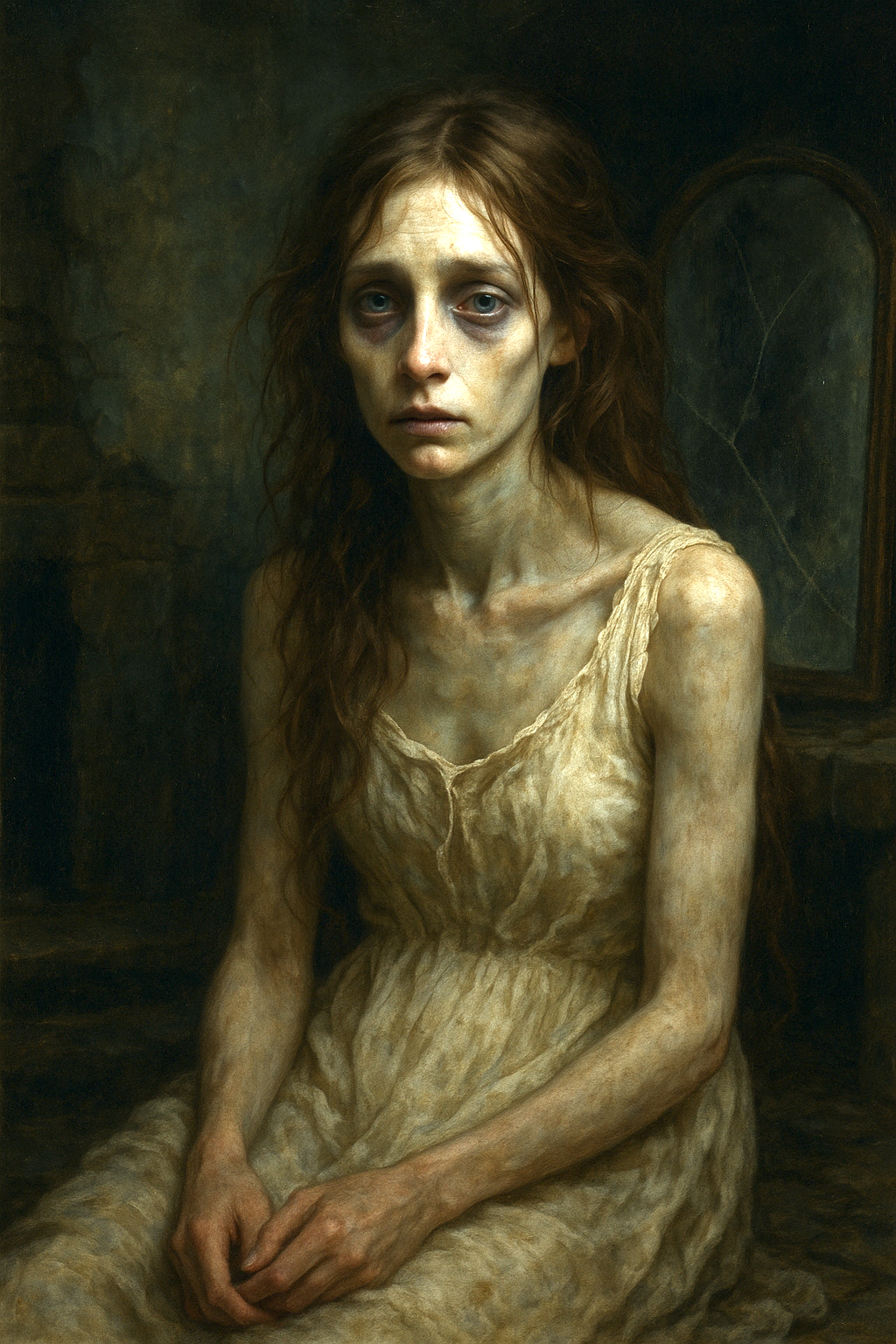
But what of Julian’s love interest? This is a romance, after all. Okay, meet Eveline. Now, don’t let the picture fool you (she’s had a rough few days when she sat patiently for this portrait). Eveline’s a woman shaped from the warmth of summer. With chestnut hair that catches the sun and a laugh that carries like birdsong across the Wiltshire fields, she embodies gentleness without fragility, and kindness without naïveté. To Julian, Elevine’s an ideal: proof that goodness endures — she’s a bright grace in his life, untouched by the soot of his ambition.
Okay, you should be picking up the vibe by now. I’ve got a selfish industrialist who hires a Zen-Buddhist-Meets-Sherlock-Holmes-like private dick to locate his missing bride, and yeah, she’s found under Blackfriars, in the sewers of London, explaining why she looks so shabby.
What happens next? Well!
Therein lies the magic.
I loved writing this story because of its archaic melodrama. Drowning in the mid-1800s stench of the Thames, it revels in disease, candlelit anguish, rain-slick cobblestones, with shadows crawling in the vaults under London, housing emotions too immense for the narrow chambers that try to contain them. It allowed me to lean wholly into the lush, operatic intensity of Victorian horror where Julian’s love curdles into obsession.
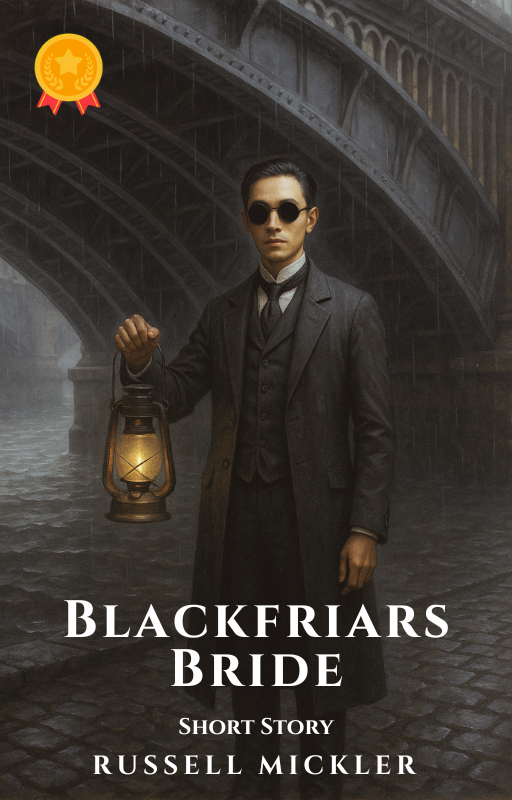
But is it a romance? Yeah, my betas had their doubts, but in its heart, I feel the story explores love stripped to its most delusional, catastrophic core. Julian’s devotion to Eveline is idealized, urgent, and fiercely possessive — it drives his actions even as his world rots and decays. Julian aches, yes, but he’s desperate to reclaim what he lost, not necessarily for Eveline’s well-being. The narrative reframes love not as salvation, but as a hunger that compels, blinds, and consumes (huh, much like vampires!), proving that even in the darkest places, yearning devours with tragic intensity.
I figured the story would do poorly when encountering a modern reader. Its flowery, melodramatic language leans into a bygone aesthetic. It’s overly dense with emotion, indulgent in description and atmosphere, and wallows in narrative excess (it’s a bubbling stew of 1P exposition), where contemporary tastes prefer greater subtlety. Sure, I’ll admit it’s ham-handedly over-the-top, but its extravagance is the point: a deliberate return to a style where passion is operatic, stakes are intimate, and sentences strain under the weight of longing and dread. I didn’t think it’d do well in a peer-based competition and would likely fail to pass through to the finals.
Well, heck, was I wrong.
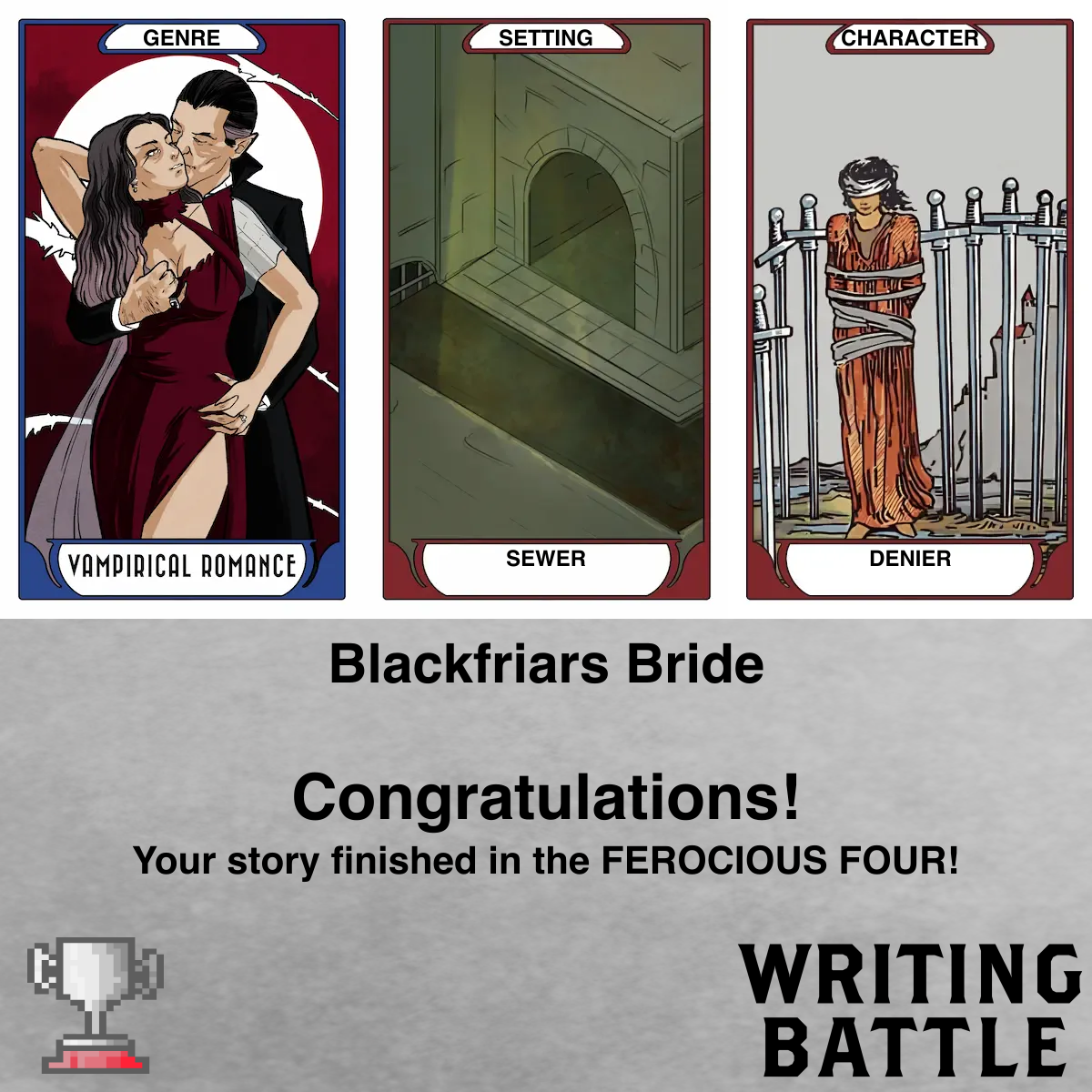
The story ended up in the semi-finals, beating out some 200+ other stories to compete for the genre's final prize. Woot! Thanks to all of the judges who voted up the story and tolerated its excess.
R